What Does 24/7 Capital Markets Actually Mean?

Mantasha Tarannum
Tokenization
5
min read

From fixed market hours to always-on financial infrastructure
Traditional capital markets typically follow a cycle where the market opens, trading takes place, the market closes, followed by settlement and reconciliation before the next business day begins.
But that model is beginning to change.
In 2026, financial centres across Europe, India, Singapore, the UAE and Hong Kong are working on different pieces of a new financial architecture built around tokenised securities, distributed ledger technology, digital money and continuous settlement infrastructure.
The goal isn't simply to make markets trade around the clock.
It is to make the infrastructure supporting those markets increasingly capable of operating around the clock.
And that distinction is important.
Europe: Central-bank money moves onto DLT rails
Europe is taking one of the clearest steps toward this model.
On 21 September 2026, the European Central Bank announced that it has begun preparatory work to invest part of its own funds in tokenised securities.
The transactions are planned to settle in central bank money through Pontes, the Eurosystem's DLT settlement solution. The initial investments will focus on euro-denominated public-sector and supranational securities.
This follows the Eurosystem's broader work on DLT settlement.
Its earlier experiments involved 64 participants across nine jurisdictions and almost €1.6 billion in central-bank-money settlements, covering payments, securities settlement and other DLT-based financial use cases.
The next step is particularly relevant to 24/7 markets.
The Eurosystem plans to launch the pilot phase of Pontes in Q3 2026, connecting DLT-based market platforms with TARGET Services so tokenised financial instruments can settle in central bank money.
The bigger idea:
Tokenised securities need tokenised or digitally accessible settlement money.
Without that connection, a tokenised market can still depend on traditional settlement infrastructure operating on traditional schedules.
India: Demat 2.0 brings tokenised bonds into the market infrastructure conversation
India is also moving from experimentation toward market infrastructure.
In September 2026, SEBI launched Demat 2.0, a pilot for tokenised corporate bonds using distributed ledger technology.
The pilot is designed to test the use of DLT across issuance, holding, trading and settlement of corporate bonds. Three companies had reportedly issued tokenised bonds worth ₹1,025 crore as part of the developments around the pilot.
This is significant because it moves the discussion beyond:
“Can we put a bond on blockchain?”
toward:
“Can the entire lifecycle of a security operate through digital infrastructure?”
That lifecycle includes issuance, ownership, transfers, settlement and potentially future servicing activities.
India's experiment therefore fits directly into the broader 24/7 capital-markets story.
Singapore: From tokenisation experiments to institutional infrastructure
Singapore has spent several years experimenting with tokenised assets through initiatives such as Project Guardian.
The use cases have included tokenised bonds, private credit, funds, foreign-exchange settlement and tokenised deposits.
In June 2026, the Monetary Authority of Singapore announced the creation of the Future of Finance Institute, initially focused on artificial intelligence and tokenisation and intended to support broader adoption across the financial sector.
The important shift is that tokenisation is increasingly being treated as part of financial-market infrastructure rather than simply as a digital-asset experiment.
Singapore's direction reflects a broader question:
What happens when issuance, trading, settlement, custody and asset servicing become digitally connected?
That is where the concept of continuous capital markets starts becoming practical.
UAE: Digital bonds are moving into the real market
The UAE provides another example of how digital securities are entering traditional financial markets.
In January 2026, Emirates NBD issued an AED 1 billion digitally native bond, described by the bank as the first AED-denominated digital bond and the largest public digital bond issued in the MENA region at the time.
The bond uses DLT through Euroclear's Digital Financial Market Infrastructure and is listed on Nasdaq Dubai.
The significance isn't simply that the bond is digital.
The issuance connects:
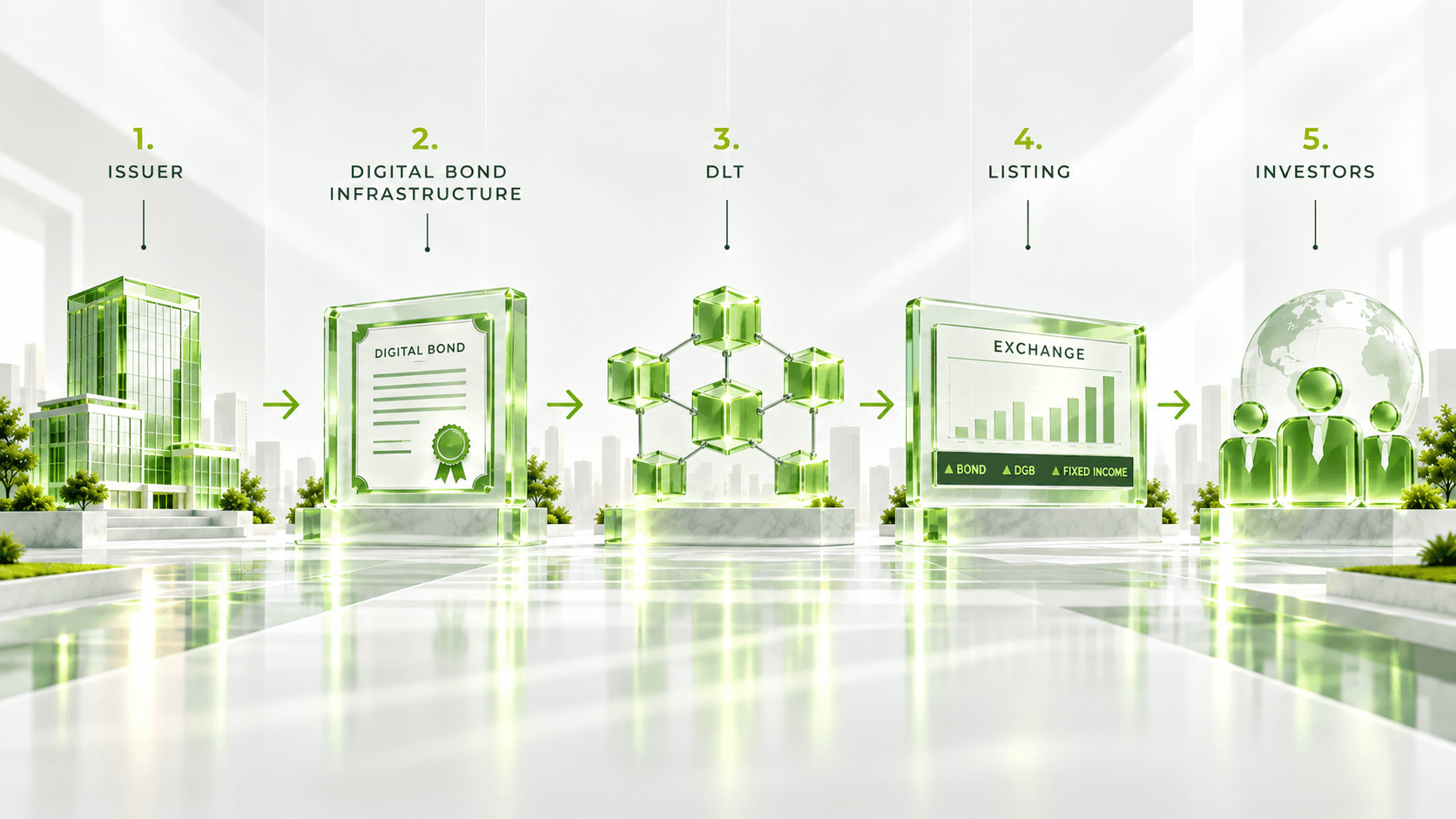
This shows how tokenised or digitally native securities can begin operating within established capital-market structures rather than sitting outside them.
At the regulatory level, the UAE is also continuing to refine its digital-asset framework. In January 2026, the DFSA brought updated Crypto Token rules into force in the DIFC.
Hong Kong: 24/7 infrastructure becomes an explicit objective
Hong Kong may offer one of the clearest examples of where this is heading.
The Hong Kong government's 2026 Policy Address states that digital bonds issued in Hong Kong between 2025 and the first half of 2026 accounted for nearly half of the global digital-bond market.
More importantly, the government plans to regularise digital-bond issuance and explore digital-currency settlement across the full lifecycle of digital bonds, including payments and redemption.
The HKMA is also planning tests for the tokenisation of Exchange Fund Bills.
The objective is particularly interesting:
enabling efficient, round-the-clock use of more than HK$1.3 trillion of Exchange Fund Bills for asset and liability management.
Meanwhile, the HKMA's EnsembleTX initiative is being developed to support tokenised-asset transactions and 24/7 settlement in tokenised central-bank money.
This takes the 24/7 concept beyond trading.
It moves toward 24/7 settlement infrastructure.
So, What Does a 24/7 Capital Market Actually Require?
A market cannot become genuinely 24/7 simply by keeping an exchange open.
Several layers need to work together.
1. Continuous issuance
Securities need digital issuance infrastructure capable of operating beyond traditional business cycles.
2. Continuous trading
Investors need regulated venues where eligible assets can be traded outside traditional market hours.
3. Continuous settlement
The transaction needs to actually settle.
This is where DLT-based settlement systems and digital settlement assets become critical.
4. Digital money
A tokenised security still needs a payment leg.
That could involve:
Tokenised deposits | Stablecoins | Wholesale CBDCs | Central-bank money
The specific model will depend on the jurisdiction, asset and regulatory framework.
5. Continuous custody
Ownership records need to remain accurate and accessible.
6. Automated asset servicing
Coupons, dividends, redemptions and other corporate actions can increasingly be handled through programmable infrastructure.
7. Continuous compliance
KYC, AML, sanctions screening, investor eligibility and transaction monitoring cannot simply stop because it is a weekend.
But Here's the Catch: 24/7 Trading Doesn't Guarantee 24/7 Liquidity
This is perhaps the most overlooked part of the conversation.
A tokenised asset can technically be transferable at 3:00 AM.
That doesn't mean there will be a buyer at 3:00 AM.
Liquidity still depends on:
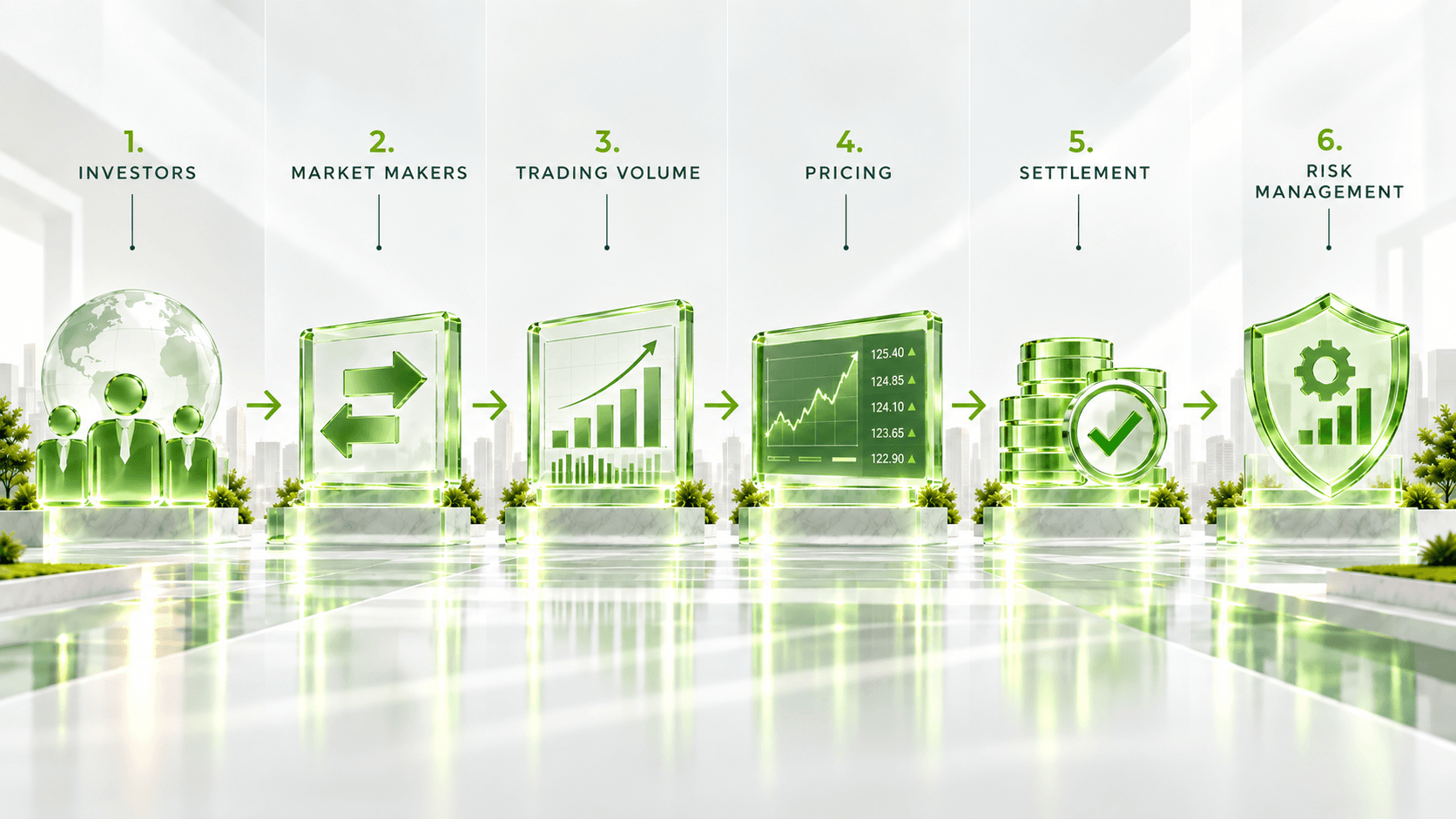
Tokenisation can improve the infrastructure around an asset.
It cannot automatically create demand for that asset.
This means the future of 24/7 markets will depend not only on blockchain infrastructure but also on market design and liquidity provision.
From T+2 to Continuous Settlement?
Traditional securities markets have historically relied on settlement cycles such as T+2.
A more digitally native market could increasingly move toward shorter settlement windows and, in some use cases, near-instant or atomic settlement.
The concept is straightforward:
Buyer receives the security
and
Seller receives the money
at the same time.
This is commonly described as Delivery versus Payment, or DvP.
When digital securities and digital money operate on compatible infrastructure, DvP can potentially become more automated and tightly integrated.
That is one of the reasons central banks and financial-market infrastructures are paying increasing attention to tokenised settlement money.
The Market Is Becoming an Infrastructure Story
The most interesting development isn't that five jurisdictions are experimenting with blockchain.
It's that they're approaching the problem from different sides.
Europe is working on central-bank-money settlement for DLT-based transactions.
India is testing tokenised corporate-bond infrastructure.
Singapore is building institutional frameworks around tokenisation.
The UAE is bringing digitally native bonds into established capital markets.
Hong Kong is exploring tokenised assets, digital settlement and round-the-clock infrastructure.
Different markets.
Different regulatory approaches.
But a similar direction:
Make financial assets, money and market infrastructure increasingly digital and interoperable.
What Could a 24/7 Capital Market Look Like?
Imagine a future investor purchasing a tokenised bond on a Sunday.
The investor completes digital identity verification.
The system checks eligibility.
The order is executed.
Digital money moves.
The bond moves.
Ownership updates.
The transaction settles.
Later, when the bond reaches its coupon date, the payment is calculated and distributed to eligible holders.
At maturity, redemption is processed.
The entire lifecycle is recorded digitally.
The investor doesn't necessarily need to think about which intermediary performed each individual step.
The infrastructure handles the workflow.
That is the bigger promise of 24/7 capital markets.
Not simply markets that never close.
But financial infrastructure that doesn't have to wait for the next business day to continue operating.
The Bigger Shift
The transition is moving from fixed market hours toward digital availability, from manual processing toward programmable workflows, from batch settlement toward continuous settlement, from repeated reconciliation toward shared digital records, from traditional securities toward tokenised and digitally native assets, and from separate infrastructure toward increasingly connected financial systems.
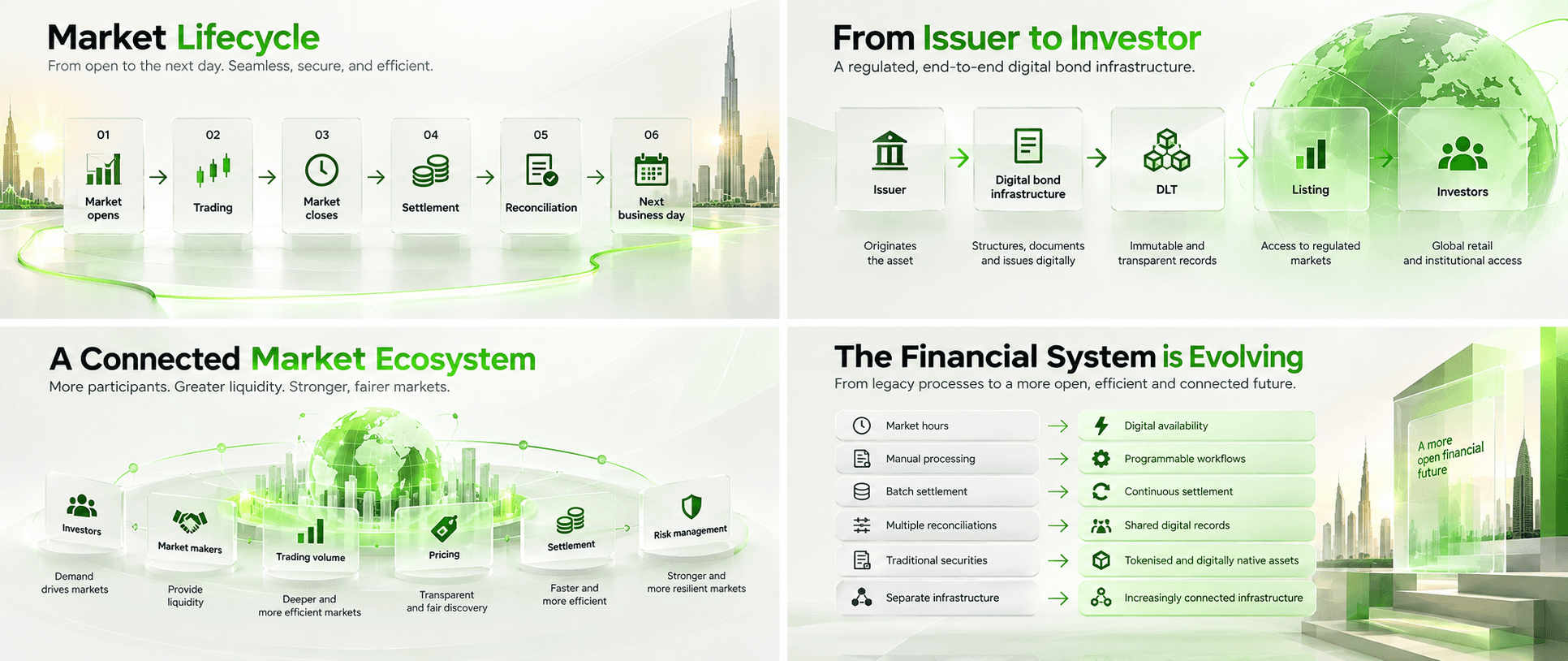
But this transition will not happen overnight.
Regulation, legal ownership, custody, interoperability, cybersecurity, liquidity and investor protection will continue to determine how quickly different markets can adopt these models.
The technology may make 24/7 markets possible.
The financial infrastructure has to make them workable.
RyzerX Perspective
At RyzerX, we see tokenisation as more than converting an asset into a digital token.
The larger opportunity lies in connecting the complete financial lifecycle:
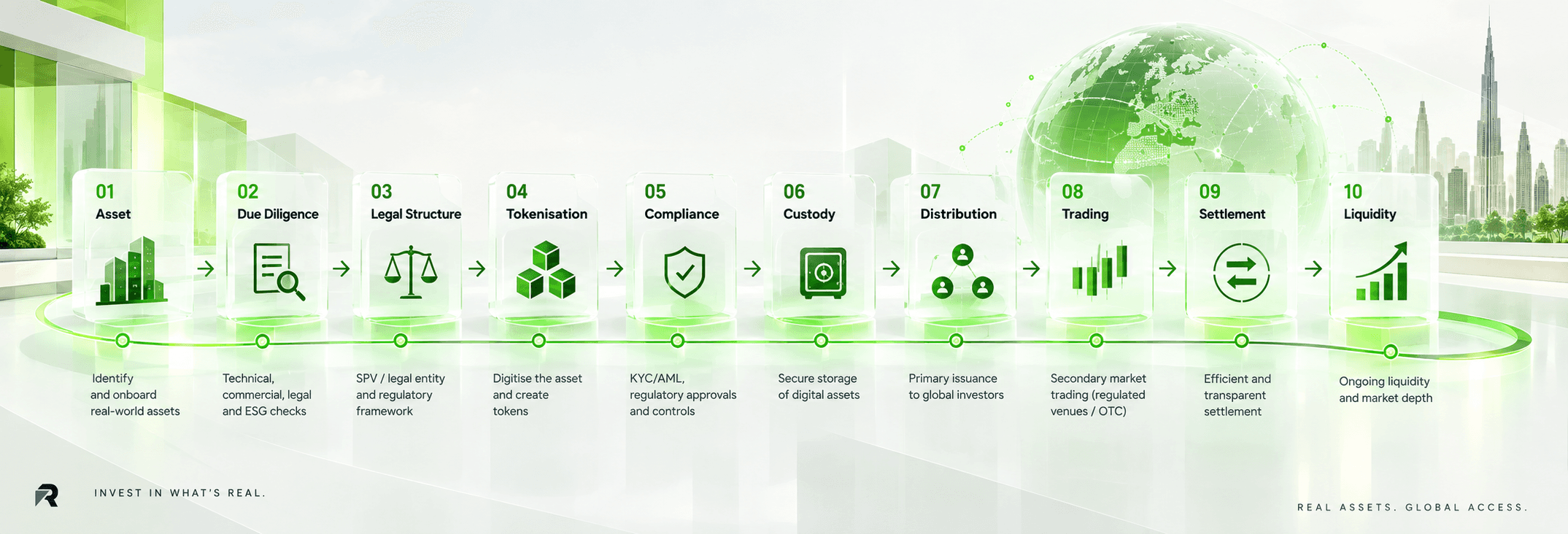
As these layers become increasingly digital and interoperable, the traditional boundaries between issuance, trading, settlement and asset servicing can begin to disappear.
The future question isn't simply:
“Will capital markets become 24/7?”
It is:
“What infrastructure will make them capable of operating 24/7?”
That is where tokenisation, digital money, DLT and regulated financial-market infrastructure increasingly converge.
Stay informed with the latest guides and news.


