From T+2 to T+0: Why Settlement Is Becoming Programmable

Mantasha Tarannum
Tokenization
5
min read

For decades, financial markets have operated around a simple assumption: A trade can happen now. Settlement can happen later.
That gap has been built into the architecture of capital markets.
When an investor buys a security today, the transaction may pass through multiple stages before ownership and payment are finally settled. Instructions are matched, trades are cleared, records are reconciled, cash and securities are transferred, and ownership records are updated.
This is why settlement cycles such as T+2 exist.
But tokenization is challenging the need for these sequential steps.
Instead of treating trading, clearing, settlement and recordkeeping as separate processes, programmable financial infrastructure can bring them closer together — potentially allowing transactions to move toward T+0 and, in some structures, atomic settlement.
The important shift isn't simply:
“Settlement becomes faster.”
It is:
“Settlement becomes programmable.”
1. What does T+2 actually mean?
T+2 means Trade Date and 2 Business Days.
If an investor purchases an asset on Monday, final settlement traditionally occurs two business days later, subject to the applicable market rules.
A simplified traditional process looks like this:
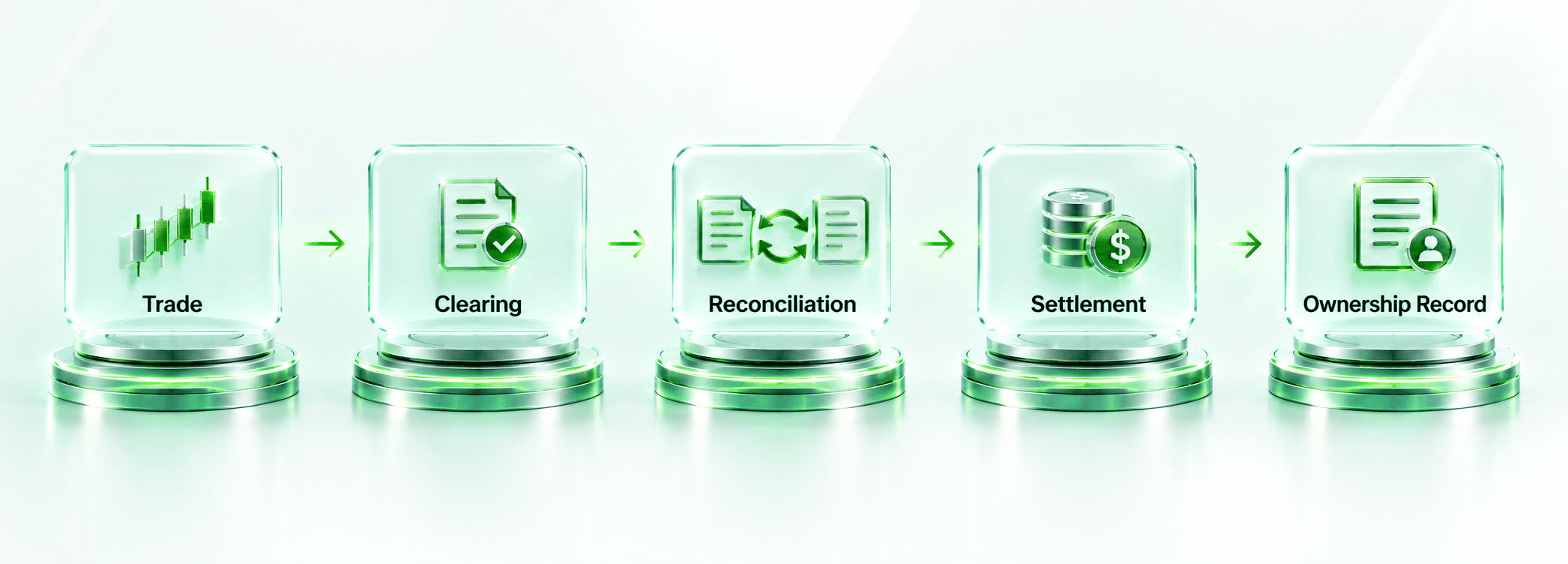
Each stage can involve different systems, institutions and records.
This architecture exists for legitimate reasons. Market participants need time to confirm transactions, calculate obligations, ensure sufficient cash and securities are available, manage risk and complete the necessary operational processes.
But every additional step can also introduce time, operational complexity and capital requirements.
2. The problem with the settlement gap
Imagine an institution purchases ₹100 million worth of a security.
The trade has been agreed.
But until settlement is completed, the transaction is not fully finalized.
During the settlement window, institutions may need to manage:
Cash requirements
Counterparty exposure
Collateral
Reconciliation
Liquidity
Operational risk
Multiple records across different systems
This creates what can be thought of as a settlement gap.
The larger the gap, the longer capital can remain tied up in processes that exist between the agreement to trade and the final transfer of value.
This is one reason settlement efficiency matters far beyond simply making transactions faster.
It affects how efficiently capital can move through the financial system.
3. Enter T+0
The basic idea behind T+0 is straightforward: Trade today. Settle today.
A simplified tokenized transaction could look like:
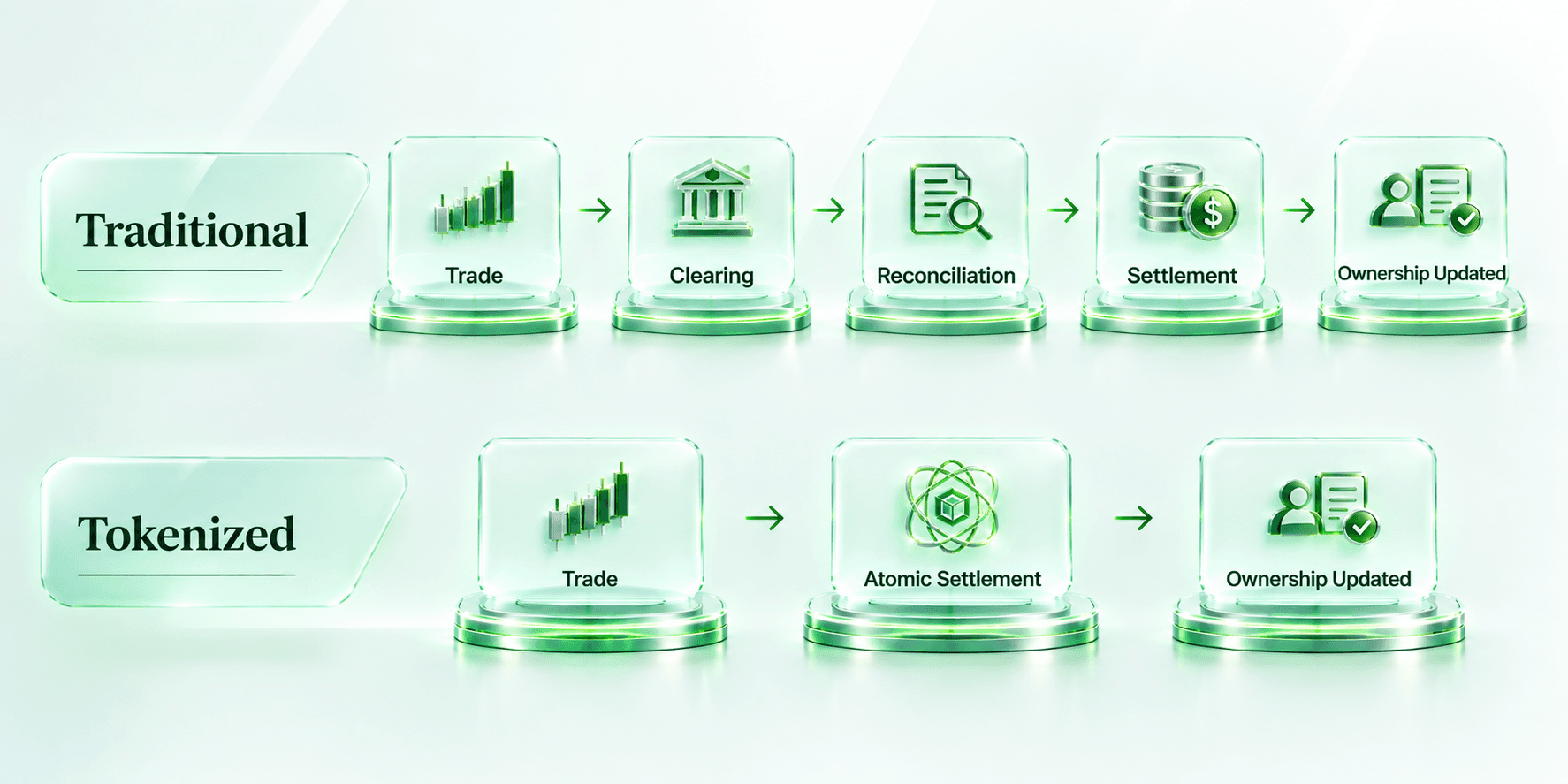
The second model does not necessarily eliminate every function or regulatory requirement.
Instead, programmable infrastructure can potentially combine, automate or synchronize processes that previously happened sequentially.
The Bank for International Settlements has highlighted this potential, noting that tokenization can bring issuance, trading, settlement and custody into a more integrated digital environment.
4. What is “atomic settlement”?
This is where the concept becomes particularly interesting.
Atomic settlement means that the exchange of assets and payment is structured so that the transaction occurs on an all-or-nothing basis.
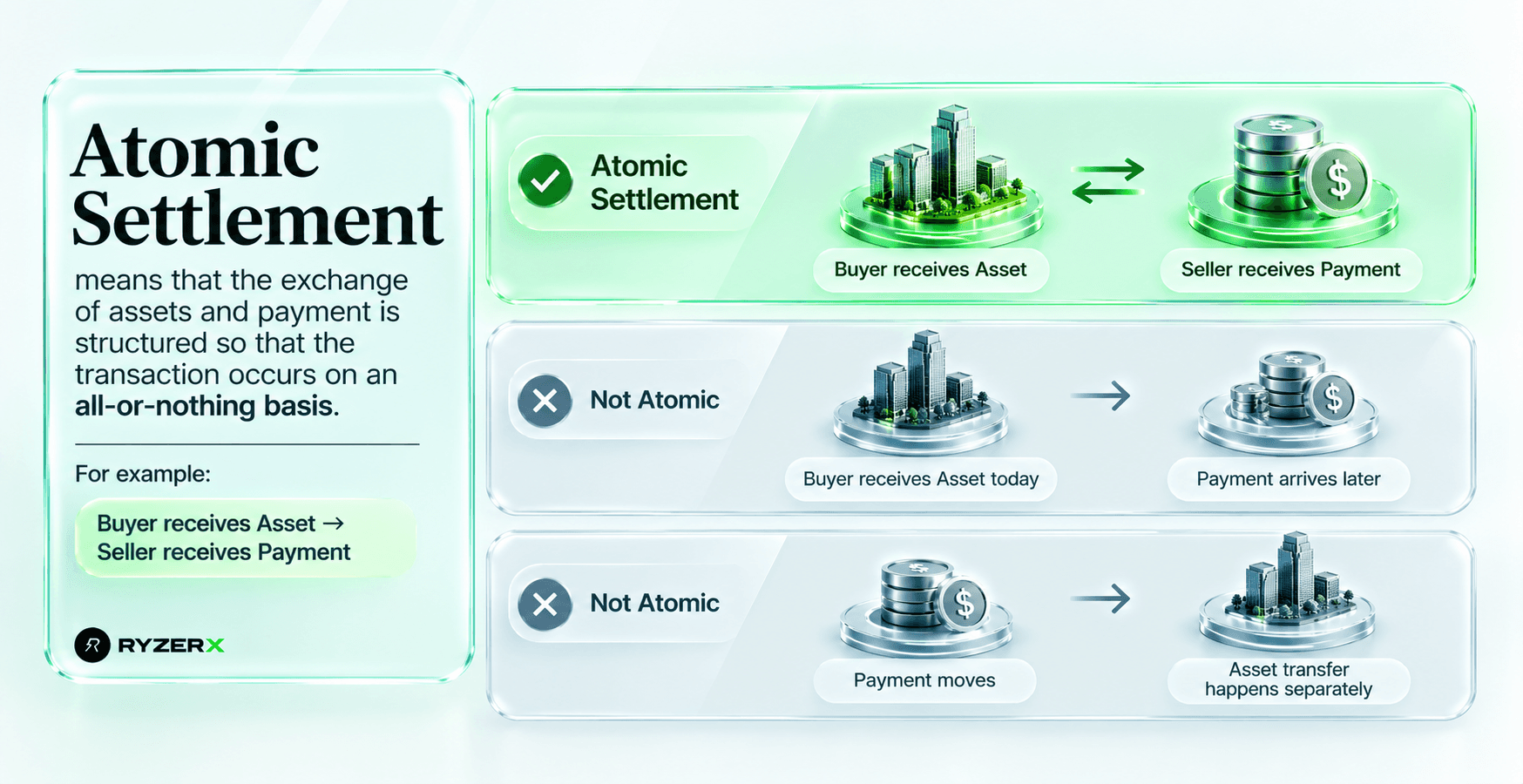
If the required conditions are satisfied, the transaction executes.
If they are not satisfied, the transaction does not complete.
This is similar to the concept of delivery-versus-payment (DvP) in securities markets.
The BIS's Project Agorá provides a current example of this direction. Its prototype demonstrated the feasibility of atomic, multi-currency settlement using tokenized commercial bank deposits and tokenized central bank reserves.
5. Why does T+0 matter?
The real value of T+0 isn't simply saving one or two days.
It is about what happens to liquidity, collateral and capital when settlement becomes more synchronized.
01 — Liquidity
When settlement takes longer, capital may remain committed to pending transactions.
Faster settlement can reduce the time capital spends in transit and potentially make liquidity available for other activities sooner.
In Project Agorá's real-value testing, participants completed transactions on a tokenized platform with an average payment-initiation-to-settlement time of approximately 80 seconds in the tested environment.
This does not mean every financial transaction can or will settle in seconds.
It demonstrates what programmable settlement infrastructure can potentially achieve under the right conditions.
02 — Collateral
Collateral is another major area where settlement speed matters.
Financial institutions frequently need to move, pledge or substitute assets to support transactions and manage exposures.
If asset ownership and settlement records can be updated more quickly, collateral may potentially become more mobile and easier to manage.
This could reduce idle periods and improve how institutions deploy balance-sheet assets.
The BIS has specifically identified tokenized assets and tokenized central bank money as important components for making collateral and liquidity management more efficient in tokenized markets.
03 — Capital Efficiency
Perhaps the biggest opportunity is capital efficiency.
Consider the difference:

When fewer resources are tied up between transaction initiation and final settlement, the same pool of capital can potentially support more activity.
That is why settlement infrastructure is becoming an important part of the tokenization conversation.
6. The bigger change: settlement becomes programmable
This is the part that is often missed.
Tokenization isn't simply about putting an existing asset on a blockchain.
The more transformative idea is that rules can become part of the transaction infrastructure itself.
For example, a tokenized transaction could potentially incorporate conditions such as:
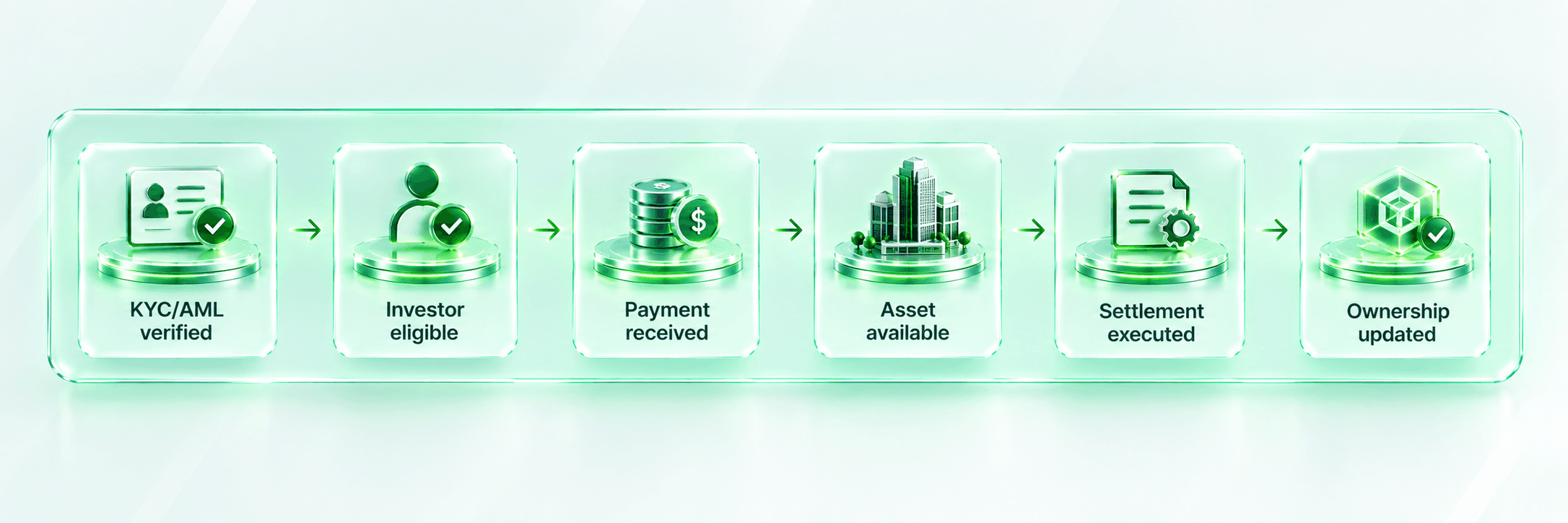
Instead of different systems communicating after every step, programmable infrastructure can allow predefined rules and transaction logic to interact within the settlement process.
Project Agorá, for example, explored embedding workflow logic, compliance requirements and conditional payment triggers into transactions.
This is where the concept of programmable finance begins to emerge.
7. T+0 doesn't mean everything becomes instant
There is an important distinction.
T+0 ≠ automatically atomic.
A transaction can settle on the same day without being fully synchronized.
And tokenizing an asset does not automatically eliminate the need for:
Regulatory checks
Legal documentation
Custody arrangements
Identity verification
Risk controls
Governance
Reconciliation with legacy systems
Settlement finality
In fact, the BIS has emphasized that today's tokenized markets still face challenges around interoperability, legal clarity, governance and integration with existing financial infrastructure.
So the transition from T+2 to T+0 is not simply a technology upgrade.
It is an infrastructure transformation.
8. From “digital asset” to “digital financial infrastructure”
The first phase of tokenization focused heavily on the asset:
“Can we tokenize real estate?”
“Can we tokenize gold?”
“Can we tokenize bonds?”
The next question is increasingly:
“What happens when the entire transaction around that asset becomes programmable?”
A tokenized real-world asset where:
Ownership
Compliance
Payment
Settlement
Transfer
Recordkeeping
can interact through a coordinated digital infrastructure. That changes the role of tokenization.
It moves the conversation from:
Putting assets on-chain
to:
Rebuilding how assets move through financial markets.
9. The road from T+2 to T+0
The transition will not happen overnight.
Financial markets are deeply interconnected with existing exchanges, custodians, banks, central securities depositories, payment systems and regulatory frameworks.

The infrastructure has to evolve alongside the assets.
And crucially, the settlement asset itself matters. Central banks and market infrastructures are exploring how tokenized central bank money or other trusted settlement assets can provide the foundation for tokenized markets.
10. The real opportunity
The most important question may therefore not be:
“How quickly can a transaction settle?”
It may be:
“How much unnecessary friction can be removed from the transaction?”
T+0 is valuable because it can bring financial actions closer together.
Trade.
Compliance.
Payment.
Settlement.
Ownership.
Collateral.
Recordkeeping.
When these processes can interact through programmable infrastructure, financial markets can potentially become faster, more transparent, more synchronized and more capital-efficient.
The future of tokenization may therefore be less about creating a new type of asset — and more about creating new rails for existing assets to move.
The Bottom Line
T+2 was designed around a world of sequential financial processes.
T+0 points toward a world where those processes can become synchronized.
And atomic settlement takes that idea one step further:
Asset, Payment and Conditions leads to One coordinated Transaction
That is why the significance of tokenization goes beyond digital ownership.
It could change the operating architecture of financial markets itself.
The next evolution of tokenization may not be making assets digital.
It may be making the movement of capital programmable.
So, are we moving from faster settlement to programmable settlement?
The real opportunity in tokenized markets may be less about eliminating T+2 and more about redesigning what happens between trade and ownership.
Stay informed with the latest guides and news.


